Introduction
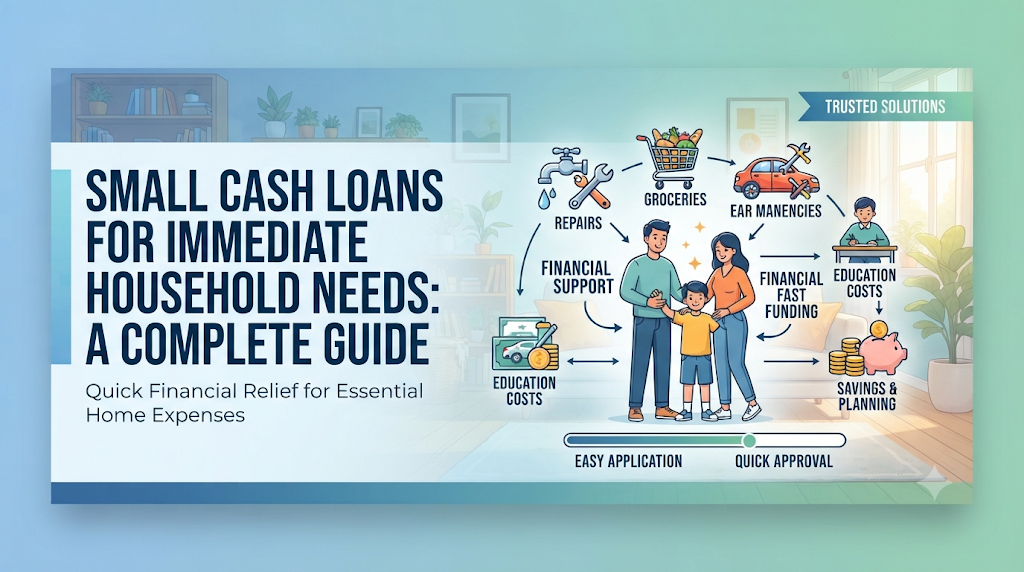
Running a household is full of surprises. One month your budget is balanced, and the next month your refrigerator breaks down, your roof starts leaking, or a family member needs sudden medical care.
When you do not have enough emergency savings to cover these surprise costs, financial pressure builds up fast. Many people look at small cash loans as a quick fix to bridge the gap until their next paycheck.
However, rushing into a loan without understanding how it works can turn a short-term fix into a long-term debt cycle. This guide explains what small cash loans are, how they work, the hidden risks involved, and how to choose the safest option for your immediate household needs.
What Is a Small Cash Loan?
A small cash loan is a relatively small amount of unsecured money borrowed from a bank, credit union, or online lender, usually paid back over a short period ranging from a few weeks to a few months.
Unlike a traditional mortgage or a large auto loan, these loans are designed for speed and convenience. The application process is usually fast, and the money often lands in your bank account within 24 to 48 hours.
Why It Matters
When a pipe bursts in your kitchen, you do not have three weeks to wait for a bank committee to review paperwork. Small cash loans offer immediate liquidity—which means cash in hand—to solve urgent problems before they get worse.
Example
Imagine your family car breaks down and you need it to get to work. Repair costs are $300, but your payday is still two weeks away. A small cash loan can cover the mechanic immediately, allowing you to keep earning your salary.
How Small Cash Loans Work
The mechanics of a small cash loan are straightforward, but the terms can vary widely depending on the lender. Understanding the lifecycle of the loan helps you avoid costly mistakes.
- Application: You apply online or in person by providing proof of income, identity, and bank details.
- Approval and Disbursement: The lender reviews your details. If approved, they transfer the cash directly to your bank account.
- Repayment: You agree to pay back the borrowed amount plus interest and fees. This is usually done through automatic deductions from your bank account on your next payday or in monthly installments.
Why People Use Small Cash Loans for Household Needs
Households face unexpected financial shocks regularly. Knowing the right situations for borrowing helps keep your finances stable.
Suitable Situations
- Emergency Home Repairs: Fixing a broken heater in the middle of winter or stopping a major water leak.
- Urgent Medical Care: Paying for unexpected doctor visits, prescription medicines, or dental emergencies.
- Essential Appliance Replacement: Replacing a broken refrigerator that holds your family’s food supply.
Unsuitable Situations
- Discretionary Spending: Buying holiday gifts, upgrading a working television, or funding a vacation.
- Routine Bills: If you consistently use loans to pay regular grocery or utility bills, it points to a deeper budget shortfall that borrowing will only worsen.
Important Factors to Understand
Before signing any loan agreement, you must look closely at several core financial terms. Lenders often highlight the easy application process while hiding the true cost of the loan.
- Principal: The actual amount of money you borrow.
- Interest Rate: The fee charged by the lender for letting you use their money, usually expressed as an Annual Percentage Rate (APR).
- Repayment Term: The length of time you have to pay back the loan. Shorter terms mean higher payments per month, while longer terms increase total interest costs.
- Processing Fees: Extra charges added by the lender just to set up the loan.
Risks and Limitations
Borrowing fast cash comes with significant trade-offs. You must weigh the relief of solving an emergency against the financial danger of the loan itself.
| Risk Factor | Why It Matters | How to Reduce It |
| High Interest Rates | Small loans often carry much higher APRs than standard bank loans, making them very expensive. | Borrow only the minimum amount needed and repay it as fast as possible. |
| Short Repayment Windows | Having to pay back the full amount on your next payday can break your next month’s budget. | Check your upcoming cash flow before agreeing to the payment schedule. |
| Debt Trap Cycle | Taking a new loan to pay off an older loan creates a spiral of mounting debt. | Treat the loan as a strict one-time emergency tool, not a regular income supplement. |
Common Mistakes Beginners Should Make Sure to Avoid
Many borrowers fall into financial trouble because of simple, avoidable errors.
- Mistake: Not reading the fine print on fee structures.
- Why people do it: The paperwork is long and difficult to read.
- Why it causes problems: Hidden late fees and prepayment penalties can double your loan cost.
- What to do instead: Ask the lender for a clear breakdown of every single fee before signing.
- Mistake: Borrowing more than necessary.
- Why people do it: Lenders often approve higher amounts than requested.
- Why it causes problems: You pay interest on money you did not actually need for your household emergency.
- What to do instead: Calculate the exact cost of the repair or bill and borrow only that specific amount.
- Mistake: Ignoring your future budget.
- Why people do it: Focusing entirely on solving today’s crisis.
- Why it causes problems: You will not have enough money for food and rent next month when the repayment is automatically deducted.
- What to do instead: Map out next month’s income and expenses to ensure you can afford the repayment installment.
Decision-Making Framework
Use this simple step-by-step checklist to decide if a small cash loan is truly right for your household need:
- Verify the Emergency: Is this expense truly urgent and necessary for daily survival or work?
- Explore Alternatives: Can you borrow from family, negotiate a payment plan with the service provider, or use a credit card with a lower interest rate?
- Calculate Total Cost: Add up the principal, interest, and all fees. Can your budget handle this total cost?
- Check Repayment Ability: Will paying back this loan leave your family short on basic food and housing money next month?
- Compare Lenders: Look at multiple offers to find the lowest interest rate and most transparent terms.
Key Terms
- Annual Percentage Rate (APR): The total yearly cost of a loan, including interest and standard fees, shown as a percentage.
- Collateral: An asset, like a car or home, that a lender can take if you fail to repay your loan. Small cash loans are usually unsecured, meaning they do not require collateral.
- Default: Failing to repay a loan according to the agreed terms, which damages your credit score and leads to heavy financial penalties.
- Liquidity: How quickly you can convert an asset into cash, or how much cash you have available right now.
- Principal: The original sum of money lent, excluding any interest or fees.
- Short-Term Debt: Borrowed money that must be paid back within a brief window, usually under one year.
- Unsecured Loan: A loan that does not require you to put up personal property as a guarantee for repayment.
FAQs
Are small cash loans safe to use?
Yes, if you borrow from licensed, reputable financial institutions or online lenders regulated by financial authorities. Always check customer reviews and regulatory registrations to avoid predatory lenders.
How fast can I get money from a small cash loan?
Many digital lenders and credit unions approve applications within minutes and transfer funds to your bank account within 24 hours, sometimes even on the same day.
Will taking a small cash loan hurt my credit score?
Applying for a loan often triggers a hard credit check, which can cause a small, temporary drop in your credit score. However, making your payments on time helps build a positive credit history, while missing payments severely damages your score.
What is the difference between a bank loan and a payday loan?
Bank and credit union personal loans usually offer lower interest rates and structured monthly payments. Payday loans are extremely short-term, high-cost loans due on your next payday and often trap borrowers in ongoing debt cycles.
Can I pay off my small cash loan early?
Many lenders allow early repayment, which can save you money on interest. However, some lenders charge early repayment fees, so you must check your contract terms beforehand.
What should I do if I cannot make my loan payment on time?
Contact your lender immediately before your payment is due. Many lenders offer hardship options, extensions, or modified payment plans rather than instantly sending your account to collections.
Conclusion
Small cash loans can act as a financial safety net when unexpected household emergencies strike. However, because they come with high costs and strict repayment terms, they require careful planning and caution.
Always look for lower-cost alternatives first, borrow only what is strictly necessary, and map out your budget to ensure you can repay the debt without harming your household’s long-term financial stability.
