Introduction
Borrowing money is a normal part of modern financial life. Whether you take out a student loan to finish college, a car loan to get to work, or a home mortgage for your family, loans help you afford big goals before you have saved the full amount.
However, paying back that money on time can sometimes feel overwhelming. Life is unpredictable. An unexpected medical bill, a sudden job change, or a temporary drop in income can make it difficult to pay your monthly bills.
When you miss a payment deadline, the consequences start immediately. Lenders charge extra fees, your debt grows, and your credit report takes a hit. Understanding how to manage your loans and prevent missed payments protects your financial health and gives you peace of mind.
What Is Loan Repayment and Why Do Late Payments Happen?
Loan repayment is the process of paying back borrowed money to a lender over a set period, usually through fixed monthly installments.
Every loan comes with a repayment schedule, which is a timeline showing exactly how much you must pay and on what specific date each month.
Why Do People Miss Payments?
Late loan repayments rarely happen because borrowers do not care. They usually happen due to specific financial traps:
- Cash Flow Mismatches: Your loan payment is due on the 5th of the month, but your employer pays you on the 10th.
- Forgetting Dates: Juggling multiple bills like rent, electricity, credit cards, and loans makes it easy to lose track of deadlines.
- Lack of Savings: Without an emergency fund, a single unexpected expense wipes out your cash, leaving nothing for your loan installment.
- Income Shocks: Losing a job, facing reduced work hours, or experiencing a business slowdown abruptly cuts off your income.
Why Avoiding Late Repayment Matters
Failing to pay your loan on time triggers a chain reaction of financial problems. It is not just about a small fine; it impacts your entire financial future.
1. Late Fees and Penalties
Lenders include clauses in your loan agreement that penalize late behavior. A late fee is an extra charge added to your account if you miss your payment window, often ranging from a fixed dollar amount to a percentage of your overdue balance.
2. Credit Score Damage
Your credit score is a three-digit number that tells lenders how trustworthy you are with borrowed money. Payment history is the biggest factor in this score. A single late payment reported to credit bureaus can drop your score significantly, making it harder and more expensive to borrow money in the future.
3. Higher Interest Costs
If your loan accrues daily interest, missing payments means your principal balance stays higher for longer. Furthermore, some lenders apply a default interest rate, which is a much higher interest rate triggered when you break the terms of your agreement.
4. Legal Action and Collections
If you miss multiple payments over several months, your loan goes into default. At this stage, lenders may hand your account over to a collection agency or take legal action to seize assets or garnish your wages.
Important Factors to Understand Before Your Loan Starts
Managing loan repayment begins long before you sign the contract. Understanding key loan terms helps you choose a loan structure you can comfortably afford.
- Principal: The original amount of money you borrow.
- Interest: The fee charged by the lender for borrowing their money, expressed as a percentage.
- Amortization: The process of spreading out a loan into a series of fixed periodic payments over time. Early payments mostly cover interest, while later payments pay down the principal.
- Grace Period: A set number of days after your due date during which you can make your payment without incurring a late fee. (Note: Interest may still accumulate during this time).
Practical Strategies to Avoid Late Loan Repayment
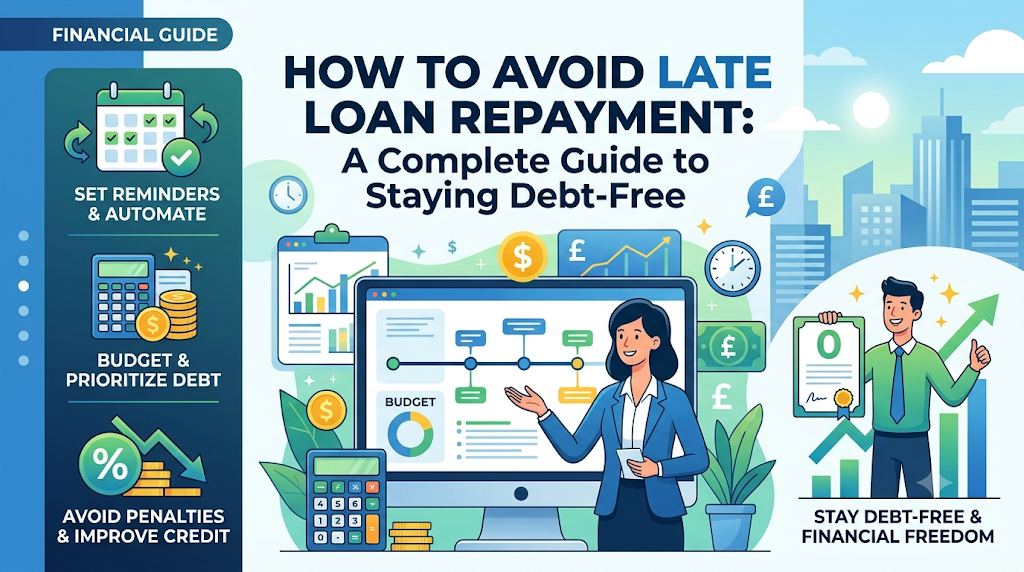
Staying ahead of your debt requires a combination of technology, organization, and smart budgeting. Here are the most effective ways to ensure you never miss a payment.
1. Automate Your Payments
The simplest way to prevent a late payment is to remove human memory from the process.
- How it works: Set up an automatic clearing house (ACH) transfer or standing instruction through your bank. The bank automatically moves money from your checking account to your lender on your due date.
- Why it matters: You never have to log into an app or remember a date.
- What to watch out for: Ensure your checking account always has enough funds on payday to cover the automatic transfer, or you might face bank overdraft fees alongside your loan fees.
2. Align Due Dates with Paydays
If your loan payment is due when your bank account is empty, you are setting yourself up for failure.
- How it works: Call your lender’s customer service department and ask to change your monthly payment due date.
- Why it matters: Moving your due date to two or three days after your payday ensures the cash is sitting in your account when the bill arrives.
3. Build a Cash Buffer
An emergency fund is a pool of money saved specifically for unexpected financial surprises.
- How it works: Try to save at least one month of living and debt expenses in a separate savings account.
- Why it matters: If your car breaks down or you have a minor medical expense, you use your emergency fund instead of spending the cash you designated for your loan payment.
4. Use Digital Alerts and Calendars
Technology can act as your personal financial assistant.
- How it works: Put your payment due dates into your digital calendar (like Google Calendar or Apple Calendar) and set reminders for three days before, one day before, and on the due date.
- Why it matters: Early warnings give you time to check your balances and move money around before the deadline arrives.
What to Do If You Cannot Pay Your Loan
Even with the best planning, emergencies happen. If you realize you do not have enough money to make your upcoming loan payment, do not ignore the problem. Lenders prefer proactive communication over silent defaults.
Contact Your Lender Immediately
Reach out to your lender before your payment is due. Explain your situation honestly. Many financial institutions offer relief options:
- Forbearance: A temporary pause or reduction of your loan payments during a financial hardship. Interest usually continues to add up, but it stops you from defaulting immediately.
- Loan Modification: Permanently changing the terms of your loan, such as lowering the interest rate or extending the repayment period to lower your monthly installment.
- Deference or Extension: Moving your missed payment to the end of the loan term, giving you breathing room in the current month.
Common Mistakes to Avoid
Borrowers often fall into predictable traps when managing debt. Recognizing these mistakes helps you sidestep them.
| Common Mistake | Why People Do It | The Problem It Causes | What to Do Instead |
| Ignoring Lender Calls | Fear or embarrassment about missing payments. | Lenders accelerate collection actions and report immediate default. | Answer the phone and negotiate a temporary hardship plan. |
| Relying Solely on Memory | Overconfidence in remembering monthly dates. | Busy schedules lead to forgotten deadlines and costly late fees. | Set up automated alerts and bank standing instructions. |
| Paying Minimums Only | Wanting to keep monthly cash flow high. | Extends the life of the loan and increases total interest paid over time. | Pay extra toward the principal whenever spare cash is available. |
| Skipping the Emergency Fund | Focusing entirely on paying down debt quickly. | Any minor emergency forces you to miss your next loan payment. | Build a small buffer fund before aggressively paying down debt. |
A Simple Decision Framework for Loan Repayment
When evaluating your monthly budget and debts, use this step-by-step checklist to keep your repayments on track:
- Audit Your Debts: List all your active loans, total balances, interest rates, and exact monthly due dates in one place.
- Sync Your Cash Flow: Check your income dates against your debt due dates. Request date changes from lenders if mismatches exist.
- Automate the Basics: Turn on automatic minimum payments for every fixed loan to guarantee they are never missed.
- Create a Buffer: Keep a small cash reserve in your checking account specifically insulated from daily spending.
- Review Quarterly: Look at your budget every three months to ensure your income comfortably covers your liabilities.
Key Terms Explained
- Default: A legal status where a borrower fails to repay a loan according to the agreed terms for an extended period.
- Grace Period: A designated window of time after a due date where late fees are waived.
- Principal Balance: The remaining portion of the original loan amount that has not yet been paid back.
- Credit Report: A detailed record of your borrowing and repayment history maintained by credit reporting agencies.
- Forbearance: An agreement allowing you to temporarily pause payments during a financial hardship.
Frequently Asked Questions
1. How many days late can a loan payment be before it hurts my credit score?
Most lenders do not report a late payment to credit bureaus until it is at least 30 days past due. However, you will usually be charged a late fee immediately after the grace period ends.
2. Will paying a loan late ruin my credit score forever?
No. While a late payment stays on your credit report for up to seven years, its negative impact fades over time, especially if you establish a consistent record of on-time payments afterward.
3. Can I negotiate to remove a late fee from my account?
Yes. If you have a strong history of paying on time and missed a payment due to an isolated mistake, call customer service, politely explain what happened, and ask for a courtesy fee waiver.
4. Is it better to pay off my loan all at once?
If your loan agreement does not include a prepayment penalty (a fee charged for paying off debt early), paying it off early saves you money on total interest. Always check your contract first.
5. What happens if I completely ignore a debt collector?
Ignoring collection agencies will not make the debt disappear. It can lead to ruined credit scores, constant phone calls, legal lawsuits, and court-ordered wage garnishment.
6. Does setting up automatic payments guarantee I will never miss a payment?
It guarantees payment as long as your bank account has sufficient funds. If your account balance drops below the payment amount, the transfer will fail, resulting in a missed payment and potential overdraft fees.
7. Should I use a credit card to pay off a loan installment?
Generally, no. Using one form of debt to pay another usually incurs high interest rates and cash-advance fees, creating a dangerous cycle of borrowing.
8. How do I find out my exact loan due dates?
Check your online loan portal, review your original loan agreement documents, or call your lender’s support hotline directly.
Conclusion
Managing loan repayments successfully does not require a degree in finance. It requires organization, awareness, and proactive habits. By automating your payments, aligning your bills with your pay schedule, and maintaining a small emergency buffer, you can protect your credit score and eliminate the stress of late fees. Stay organized, communicate openly with your lenders if trouble arises, and keep your financial future secure.
