Introduction
Borrowing money is common. Whether it is an education loan, a home mortgage, or a small personal loan to cover an emergency, taking credit helps people reach goals they could not afford immediately. However, the excitement of getting funds often fades when the monthly bills start arriving.
Without a clear system, managing multiple debts can feel confusing and overwhelming. Many people pay random amounts whenever they remember, leading to high penalty fees and a feeling that they are never making real progress.
A well-designed repayment plan removes this stress. It changes debt from a heavy burden into a predictable, manageable monthly task. This article will show you how to build a practical loan repayment plan from scratch, choose the right strategy for your situation, and stay on track until your balance reaches zero.
What Is a Loan Repayment Plan?
A loan repayment plan is a written schedule or strategy that organizes all your debts and details your monthly payment amounts.
Think of it as a personal roadmap for your money. Instead of guessing how much you can afford to pay each month, your plan gives you an exact number. It maps out which loan gets paid first, how long the repayment will take, and how much total interest you will pay over time.
Why It Matters
Without a plan, money easily slips away. When you do not track your payment dates or interest rates, you often pay the minimum required amount.
Minimum payments keep your account in good standing, but they mostly cover interest rather than the original amount borrowed (known as the principal). This means your debt shrinks very slowly, and you end up paying much more money to the lender over the life of the loan. A repayment plan ensures your hard-earned money actually reduces what you owe.
How Loan Repayment Works
To build a solid plan, you must understand the moving parts of any loan. Every time you make a monthly payment, the money is split into two main categories:
- Principal: The actual amount of money you originally borrowed.
- Interest: The fee the lender charges you for borrowing their money, usually calculated as a percentage of the remaining principal.
At the beginning of a long-term loan, a large portion of your monthly payment goes toward interest. As time passes and the principal shrinks, more of your payment goes toward paying down the actual debt.
When you pay extra money toward your loan, lenders usually apply that extra cash directly to the principal. This lowers the base amount, which reduces the total interest charged in future months.
Important Factors to Understand Before You Begin
Before writing down numbers, you need to gather specific details about your current financial standing. Do not guess your numbers; check your official loan statements online or call your lenders to get exact figures.
1. Outstanding Balance
This is the total amount you still owe on each loan today. It is rarely the exact same number you originally borrowed because of previous payments or added fees.
2. Interest Rate (APR)
The Annual Percentage Rate (APR) tells you how expensive the loan is on a yearly basis. A higher APR means the loan grows faster and costs you more money.
3. Minimum Monthly Payment
This is the absolute lowest amount your lender will accept each month without marking your account as late or defaulting.
4. Due Dates
Knowing the exact calendar day your payments are due helps you match them up with your income schedule (such as your weekly or monthly paychecks).
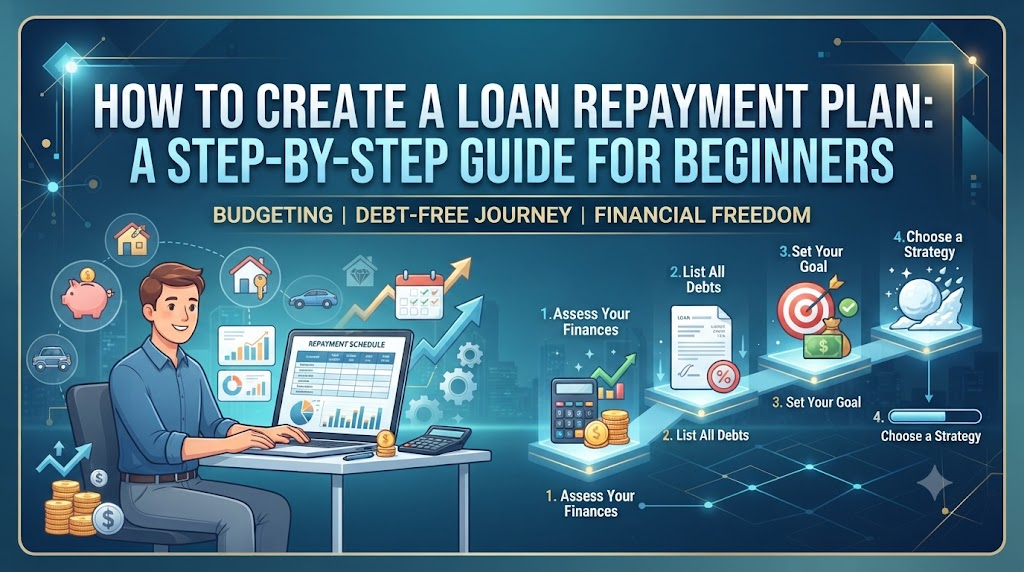
Step-by-Step Guide to Creating Your Loan Repayment Plan
Step 1: List All Your Debts
Step 2: Calculate Your Disposable Income
Step 3: Choose Your Repayment Strategy
Step 4: Automate Your Payments
Step 5: Review and Adjust Monthly
Step 1: List All Your Debts
Create a simple table or list on a piece of paper. Write down every single loan you have, including credit cards, car loans, and student loans. Include the balance, APR, and minimum payment for each.
| Loan Name | Total Balance | Interest Rate (APR) | Minimum Payment |
| Credit Card A | $2,500 | 22% | $75 |
| Personal Loan | $5,000 | 12% | $150 |
| Student Loan | $12,000 | 6% | $140 |
Step 2: Calculate Your Disposable Income
Look at your monthly bank statements and calculate your total take-home pay. Subtract your fixed living costs (rent, utilities, groceries, transportation) from your income.
The money left over is your disposable income. This is the maximum amount you have available to put toward your debts beyond your minimum payments.
Step 3: Choose Your Repayment Strategy
Once you know how much extra money you can put toward your loans each month, decide how to distribute it using one of two popular methods:
- The Debt Avalanche Method: You pay the absolute minimum on all your loans, but put every extra dollar toward the loan with the highest interest rate. Once that loan is fully paid off, you move that entire payment amount to the loan with the next-highest rate. This method saves you the most money over time.
- The Debt Snowball Method: You put all your extra money toward the loan with the smallest total balance, regardless of the interest rate. Once that small balance disappears, you roll its payment into the next-smallest balance. This method gives you quick psychological wins that keep you motivated.
Step 4: Automate Your Payments
Human memory is unreliable, and missing a single due date can trigger costly late fees and hurt your credit score. Log into your bank or lender portals and set up automatic payments for at least the minimum amounts. If possible, set up automatic transfers for your extra monthly payoff amount as well.
Step 5: Review and Adjust Monthly
Your financial life changes over time. You might get a raise, experience a medical expense, or finish paying off a specific bill. Review your repayment plan once a month. If your income increases, channel the extra money directly into your remaining loan balance to speed up your progress.
Practical Example
Imagine Rohan has a monthly take-home salary of $3,000. After paying rent, buying food, and covering utilities, he has $400 left over as disposable income.
Rohan has two debts:
- A credit card debt of $1,500 at 20% APR with a $50 minimum payment.
- A car loan of $8,000 at 8% APR with a $200 minimum payment.
Total minimum payments equal $250. This leaves Rohan with $150 of extra disposable income.
If Rohan uses the Debt Avalanche method, he pays the $50 minimum on the credit card and the $200 minimum on the car loan. He then adds his $150 extra income directly to the credit card because it has the highest interest rate (20%).
His total monthly payment toward the credit card becomes $200 ($50 minimum + $150 extra). Because of this focused approach, the expensive credit card balance shrinks quickly, saving him hundreds of dollars in interest charges compared to paying minimums on both accounts equally.
Common Mistakes to Avoid
Many people struggle to finish their repayment plans because of simple, avoidable errors.
1. Ignoring Small Debts
What people do: They focus entirely on massive long-term loans while letting small utility bills or store cards sit unpaid.
Why it causes problems: Small forgotten bills can turn into collection accounts, damaging your credit score even if your large loans are current.
What to do instead: Include every single debt, no matter how small, in your initial master list.
2. Setting Unrealistic Goals
What people do: They commit every single cent of their leftover income to debt repayment, leaving zero buffer for emergencies.
Why it causes problems: When a sudden car repair or doctor visit happens, they have no cash and must use credit cards all over again.
What to do instead: Build a small emergency fund of $500 to $1,000 before making aggressive extra debt payments.
3. Stopping the Plan After One Setback
What people do: If they miss a payment one month, they feel like failures and abandon the plan entirely.
Why it causes problems: One mistake does not ruin a long-term financial strategy. Stopping completely makes the debt problem worse.
What to do instead: Expect occasional bumps, adjust your budget if necessary, and resume your automated payments immediately the next month.
Risks and Limitations
A repayment plan is a powerful tool, but it has boundaries you must keep in mind.
- Income Vulnerability: If your income drops suddenly due to job loss or illness, your strict repayment plan may become impossible to maintain. Always keep emergency savings to protect against this risk.
- Inflation and Living Costs: General prices for food, rent, and energy rise over time. If your living expenses increase faster than your income, you may need to temporarily pause extra debt payments to cover basic survival needs.
Checklist Before You Start Your Plan
Use this practical checklist to make sure your loan repayment plan is ready for action:
- Have I gathered exact balance and interest rate details for every single loan?
- Do I know my true monthly take-home income after all fixed living costs?
- Have I picked either the avalanche or snowball strategy to guide my extra payments?
- Have I set up automatic minimum payments to protect my credit score from late fees?
- Do I have a small emergency fund set aside so unexpected bills won’t break my plan?
Key Terms
- APR (Annual Percentage Rate): The yearly cost of borrowing money, including interest and basic fees, expressed as a percentage.
- Default: Failure to make loan payments on time, which allows the lender to take legal action or seize collateral.
- Disposable Income: The money you have left over from your salary after paying for essential needs like housing, food, and utilities.
- Minimum Payment: The smallest amount of money a lender requires you to pay each month to keep your account in good standing.
- Principal: The original sum of money lent or owed, separate from the interest charges.
FAQs
What happens if I miss a loan payment?
Missing a payment usually results in a late fee added to your balance. If the payment is more than 30 days late, the lender can report the delinquency to credit bureaus, which will lower your credit score and make future borrowing more expensive.
Should I pay off my loans early?
In most cases, yes. Paying off loans early reduces the total amount of interest you pay. However, check your loan agreement first to ensure your lender does not charge a prepayment penalty for paying off the balance ahead of schedule.
Is it better to pay off high interest or low balance first?
It depends on your financial goals. Paying off the high-interest loan first (the avalanche method) saves you the most money. Paying off the lowest balance first (the snowball method) gives you quick mental wins that make it easier to stay motivated.
Can I negotiate with my lenders if I cannot afford my payments?
Yes. Lenders prefer working out a temporary modified payment plan over having a borrower default entirely. Contact your lender’s customer support department before you miss a payment to ask about hardship programs or temporary payment reductions.
How does a repayment plan affect my credit score?
Consistently following a repayment plan improves your credit score over time. On-time payments make up a major portion of your credit score, while shrinking balances lower your overall credit utilization ratio.
What should I do if my minimum payments are higher than my income?
If your minimum debt payments exceed your take-home pay, your budget is in crisis. Contact a certified credit counseling agency immediately, explore debt consolidation options, or speak with your lenders about formal hardship assistance programs.
Conclusion
Creating a loan repayment plan takes away the guesswork and anxiety of managing multiple debts. By listing your loans, choosing a clear strategy like the avalanche or snowball method, and setting up automatic payments, you take control of your financial future.
Stay consistent, protect a small emergency fund for unexpected events, and watch your balances shrink month by month until you achieve complete financial freedom.
