Introduction
Taking a loan feels a bit like buying a ticket for a roller coaster. You look at the big drop, the exciting speed, and the final destination. But sometimes, people forget to check if there are extra fees just to buckle the seatbelt, buy a photo at the end, or store a bag while on the ride.
In the financial world, those extra fees are often hidden in deep shadows. Borrowers focus entirely on the interest rate while ignoring processing charges, service fees, or early payment penalties. When those extra costs show up later, monthly budgets break down instantly.
Understanding loan fee transparency protects your hard-earned money. This article explains what transparent fees look like, why lenders sometimes hide costs, and how you can spot hidden charges before signing any agreement.
What Are Loan Fees?
Loan fees are the extra charges that financial institutions add on top of the actual amount you borrow. When a bank or lender gives you money, they do not do it for free. They charge interest for the use of their money, but they also charge various administrative fees to process, manage, and close your account.
Think of it like buying an airplane ticket. The base fare is the price of the flight. But airlines often charge extra for checked bags, seat selection, and meal services. Loans work the exact same way. The loan amount is your base ticket, while the fees are the extra service charges added along the way.
Why Transparent Loan Fees Matter
Transparency means absolute clarity. When loan fees are transparent, every single cost is laid out on the table before you agree to anything.
Accurate Comparison Shopping
If one lender offers a lower interest rate but high hidden fees, while another offers a slightly higher interest rate with zero hidden costs, transparency helps you see which option actually costs less. Without clear fee disclosures, comparing two different loan offers becomes an unfair guessing game.
Protecting Your Monthly Budget
Unexpected fees can ruin a carefully planned budget. If your monthly loan payment jumps because of an unannounced administrative charge, you might struggle to pay for daily essentials like groceries, rent, or utilities.
Building Trust Between Borrower and Lender
Clear fee structures show that a lending institution operates fairly. When lenders hide terms in complex legal paragraphs, it creates a stressful relationship built on confusion and distrust.
Common Types of Loan Fees
Lenders use various names for the fees they attach to credit products. Knowing these terms helps you identify what you are actually paying for.
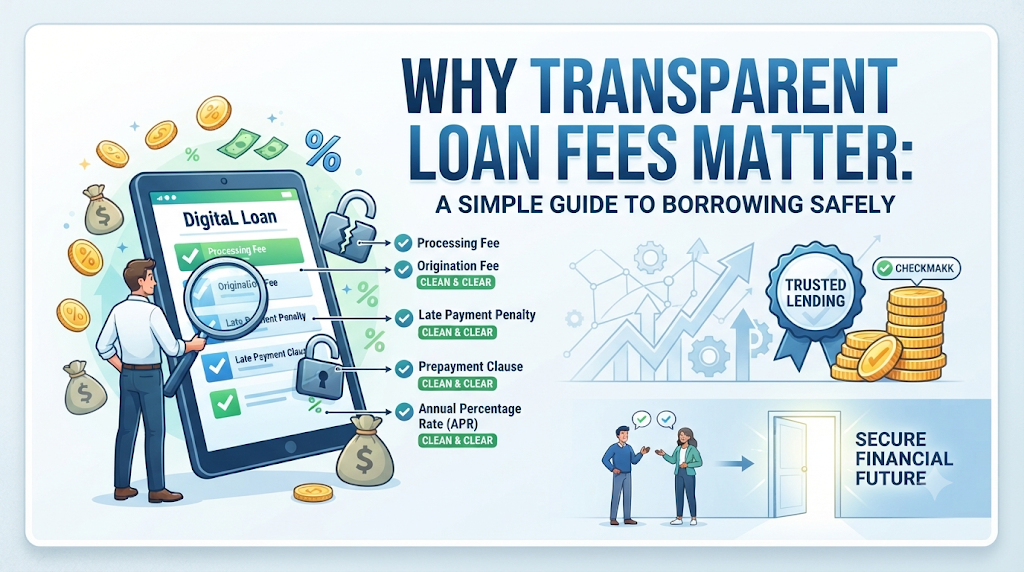
- Processing Fee: A one-time charge for reviewing your loan application, checking your credit history, and setting up your account.
- Prepayment Penalty: A fee charged if you decide to pay off your loan faster than scheduled. Lenders charge this because they lose out on future interest payments.
- Late Payment Fee: A penalty applied when you miss your monthly repayment deadline.
- Origination Fee: Similar to a processing fee, this covers the administrative work required to originate and issue the loan.
- Annual or Maintenance Fee: A recurring yearly charge for keeping the loan account active, often found in credit lines or specific business loans.
How Hidden Fees Trap Borrowers
Hidden fees usually stay out of sight until the very last moment. Lenders sometimes use complex financial jargon or bury numbers deep inside standard terms and conditions.
The Illusion of Cheap Credit
A lender might advertise a very low interest rate to grab your attention. Once you apply, they add heavy processing fees, mandatory insurance charges, and setup costs. By the time you notice, you have already invested time in the application process and feel pressured to sign.
Complex Calculation Methods
Some lenders calculate fees as a percentage of the total loan amount rather than a flat fee. On a large loan, a small percentage can translate into a massive chunk of money taken straight out of your disbursed funds.
Real-World Example
Imagine two different lenders offering a personal loan of 100,000 rupees.
- Lender A offers a 10% interest rate with clear, upfront disclosure of a flat 1,000-rupee processing fee. No other charges exist.
- Lender B advertises a tempting 9% interest rate. However, they include a 3% loan origination fee, a 2,000-rupee document verification charge, and a strict prepayment penalty.
At first glance, Lender B looks cheaper because of the 9% rate. But when you calculate the total cost including all hidden charges, Lender B actually costs significantly more. Transparent fee disclosures from Lender A allow you to see the real financial picture instantly.
Common Mistakes Borrowers Make
- Focusing Only on Interest Rates: Ignoring all other charges and assuming the interest rate is the only cost that matters.
- Skipping the Fine Print: Accepting digital loan terms with a quick click without reading the fee schedule section.
- Failing to Ask Direct Questions: Hesitating to ask loan officers for a complete, itemized list of every single fee involved.
- Rushing the Decision: Yielding to high-pressure sales tactics that demand immediate agreement before you can review the total cost breakdown.
Risks and Limitations of Opaque Lending
Working with lenders who lack fee transparency creates serious financial risks.
- Debt Spirals: Unexpected charges can cause missed payments, leading to severe late fees, damaged credit scores, and mounting financial stress.
- Loss of Control: Borrowers lose the ability to plan their finances accurately because costs change without clear warning.
- Legal and Contractual Traps: Vague clauses in loan agreements can sometimes give lenders the right to introduce new service charges mid-term.
Decision-Making Framework: How to Evaluate a Loan Offer
Use this simple step-by-step framework before accepting any credit offer:
- Request the Complete Fee Schedule: Ask the lender for a written, itemized list of every single fee, charge, and penalty associated with the loan.
- Calculate the Total Cost: Add the principal amount, total interest, and all combined fees together to find the actual out-of-pocket cost.
- Compare Multiple Options: Look at offers from at least two or three different providers to see how their fee structures stack up against each other.
- Check the Early Repayment Rules: Find out if you will be penalized for paying off the loan ahead of schedule.
- Read the Fine Print Carefully: Look specifically for clauses about adjustable administrative charges or unexpected maintenance fees.
- Walk Away If Unclear: If a lender is evasive or refuses to provide a clear cost breakdown, look for a more transparent financial partner.
Checklist for Safe Borrowing
- [ ] Did the lender provide a clear, written breakdown of all fees?
- [ ] Have I checked for processing, origination, and administrative charges?
- [ ] Do I know if there is a penalty for paying the loan early?
- [ ] Have I compared the total loan cost, not just the interest rate?
- [ ] Are the late payment terms and penalty amounts clearly stated?
- [ ] Did I read through the fine print of the loan agreement?
Key Terms
- Annual Percentage Rate (APR): The total yearly cost of a loan, including both the interest rate and all standard administrative fees combined.
- Principal: The original sum of money borrowed from a lender, before interest and fees are added.
- Prepayment: Paying off all or part of a loan ahead of the agreed schedule.
- Origination Fee: An upfront fee charged by a lender for processing a new loan application.
- Disbursement: The actual release or transfer of loan funds into the borrower’s account.
FAQs
Why do some lenders hide their loan fees?
Some lenders hide fees to make their interest rates look lower than their competitors, attracting borrowers who only shop based on headline rates.
Are all loan fees negotiable?
Some upfront fees, such as processing or origination charges, can sometimes be waived or reduced if you have an excellent credit history and negotiate with the lender.
What is the difference between an interest rate and APR?
The interest rate is just the cost of borrowing the principal amount. The APR includes the interest rate plus all mandatory fees, giving you a truer picture of the loan’s actual cost.
Can a lender add new fees after I sign the loan agreement?
Legitimate lenders cannot add random new fees unless those charges were explicitly outlined and agreed upon in the original signed contract.
How can I report a lender with unfair fee practices?
If a lender uses deceptive practices or conceals mandatory charges, you can report them to local financial consumer protection authorities or banking regulators.
Is a zero-fee loan always the best choice?
Not necessarily. Lenders offering zero upfront fees often compensate by charging a higher interest rate, which might cost more over the long run.
Conclusion
Transparent loan fees form the foundation of safe and smart borrowing. When every cost stands out clearly in plain sight, you keep control over your financial future. Always look past the flashy interest rates, demand complete fee disclosures, and calculate the true total cost before signing any credit agreement. Clear information protects your budget and ensures your borrowing experience remains stress-free.
