Introduction
Unexpected bills can pop up when you least expect them. A car repair bill, a medical emergency, or a sudden home repair can leave you short on cash. When you need money immediately, quick loans can look like an easy solution. Online lenders and mobile apps promise cash in your bank account within minutes.
Many people rush into these loans because they feel stressed. They fill out a quick online form and accept the money without reading the fine print. This rush often leads to trouble. High interest rates, hidden fees, and short payment deadlines can turn a small temporary problem into a long-term financial burden.
Taking a quick loan is a serious financial choice. Before you sign any digital agreement, you need to slow down and check your options. This guide will walk you through the essential steps to take before applying for a quick loan so you can protect your money and make a smart choice.
What Is a Quick Loan?
A quick loan is a short-term financial product designed to provide cash to borrowers very fast. Lenders usually approve these loans online with minimal paperwork.
Simple Meaning
A quick loan is a small amount of money you borrow for a short time, which you must pay back quickly, usually with a high fee or high interest rate.
Why It Matters
Because these loans are fast and easy to get, they often come with a heavy cost. Understanding what you are signing up for helps you avoid falling into a debt trap where you have to borrow more money just to pay off the first loan.
Example
Imagine your refrigerator breaks down, and you need five hundred dollars immediately to buy a new one. You apply for an online quick loan and get the cash the same day. However, the lender charges a high interest rate, meaning you will have to pay back six hundred dollars in just thirty days.
How Quick Loans Work
Understanding the mechanics of a quick loan helps you see why preparation is so important.
The Application Process
You usually apply through a website or a mobile app. You fill out your personal details, income proof, and bank account information. The lender uses automated systems to check your details and approve the loan in minutes.
The Repayment Structure
Unlike traditional bank loans that give you years to pay back money in small monthly pieces, quick loans often require full repayment on your next payday or within a few weeks.
Why Repayment Terms Matter
Short repayment windows catch many borrowers off guard. If your next paycheck goes entirely toward paying back the loan, you might not have enough money left for food, rent, or utilities. This forces people to take out a second loan to cover the first one, starting a dangerous cycle of debt.
Important Factors to Evaluate Before You Apply
Before you tap the submit button on a loan app, check these critical factors.
1. The True Cost of Borrowing
Do not just look at the amount you are borrowing. Look at the total cost. This includes:
- Interest rates: The percentage charged on top of what you borrowed.
- Processing fees: Upfront charges just to open the loan.
- Late fees: Penalties if you miss your payment date by even a single day.
2. Your Repayment Capacity
Look at your upcoming income and expenses. Ask yourself a simple question: Will I have enough money left after paying my essential bills to clear this loan in full on the due date? If the answer is no, you should not take the loan.
3. The Urgency of the Expense
Is this expense truly an emergency?
- True Emergency: Medical bills, urgent home repairs, or essential car fixes needed to get to work.
- Non-Emergency: Shopping sales, vacations, dining out, or buying non-essential gadgets. Quick loans should never be used for non-essential wants.
Realistic Examples
To see how this works in real life, let us look at two different scenarios.
Scenario A: Rushing Without Planning
Rohan’s car battery dies, and he needs two hundred dollars to replace it so he can drive to work. Without checking his budget, he takes a quick loan with a two-week repayment term. When payday arrives, Rohan has rent and utility bills due. He cannot pay the full loan amount. The lender charges a hefty late fee and adds more interest. Rohan is now in a worse financial spot than before.
Scenario B: Planning Ahead
Priya faces the same car trouble. Before applying for a loan, she checks her savings account and realizes she has a small emergency fund she forgot about. She uses that money instead of borrowing. For expenses she cannot cover with savings, she calls her utility provider to ask for a payment extension instead of taking an expensive loan. By exploring other choices, Priya avoids high interest costs.
Alternatives to Consider
Before choosing a quick loan, always check if you have safer, cheaper alternatives.
- Emergency Savings: Using money you have set aside for a rainy day is always the cheapest option because you pay zero interest.
- Salary Advance: Some employers let workers draw a small part of their earned wages early without charging high fees.
- Friends or Family: Borrowing from someone you trust can give you flexible repayment terms and low or zero interest. Always treat this professionally and pay them back on time.
- Asset Sale: Selling unused items online can give you quick cash without adding new debt.
- Payment Extensions: If you owe money to a hospital, utility company, or landlord, call them and explain your situation. Many will give you extra time to pay without penalty.
Common Mistakes to Avoid
Many borrowers make predictable errors when looking for quick cash. Here is how to avoid them:
- Mistake: Skipping the terms and conditions.
- Why it happens: People are in a hurry and want cash fast.
- The problem: You miss hidden fees or steep penalty clauses.
- What to do instead: Spend five minutes reading the repayment schedule and fee breakdown before signing.
- Mistake: Borrowing more than you need.
- Why it happens: The lender offers a higher limit, and it feels tempting to take extra cash “just in case.”
- The problem: Larger loans mean higher interest and harder repayments.
- What to do instead: Calculate the exact amount required for your emergency and borrow only that specific sum.
- Mistake: Ignoring your budget.
- Why it happens: Relying on hope that things will work out next month.
- The problem: Missing payments hurts your credit score and adds heavy late fees.
- What to do instead: Map out your next month’s income and fixed expenses on paper before accepting any funds.
Risks and Limitations
Quick loans carry distinct risks that every borrower should understand.
| Risk | Why It Matters | How to Reduce It |
| High Interest Rates | Increases the total money you must pay back, straining your wallet. | Borrow the smallest amount possible and pay it back early if allowed. |
| Aggressive Collection | Some predatory lenders use harsh collection tactics if payments are late. | Only borrow from registered, licensed, and reputable financial platforms. |
| Credit Score Damage | Missing payments can lower your credit score, making future borrowing harder. | Set up calendar alerts or auto-pay so you never miss a due date. |
Step-by-Step Decision Framework
Use this simple framework to decide if a quick loan is right for your situation:
- Define the Problem: Write down exactly why you need the money and how much it will cost.
- Examine Alternatives: Check if you can use savings, ask for a bill extension, or find alternative cash sources.
- Calculate Repayment: Look at your upcoming budget. Confirm that your future income can comfortably cover the loan.
- Verify the Lender: Ensure the lender is licensed, has clear terms, and does not hide fees in fine print.
- Borrow Minimum: If you must proceed, take only the exact amount needed and set a reminder for the repayment date.
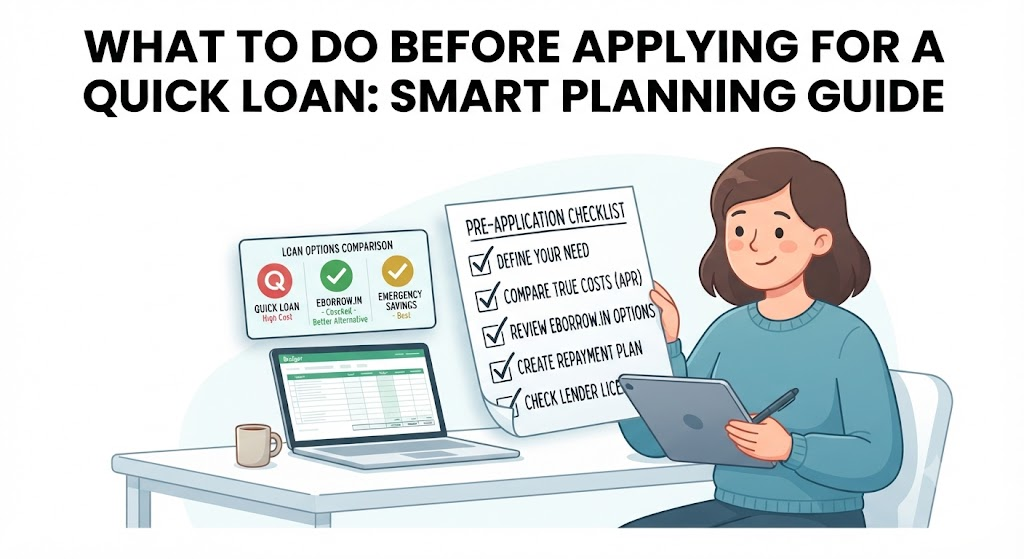
Pre-Application Checklist
Before you hit apply, run through this quick checklist:
- [ ] Have I checked if I can use existing savings instead?
- [ ] Is this expense a true emergency?
- [ ] Do I know the exact total cost, including interest and fees?
- [ ] Have I mapped out my next month’s budget to ensure I can repay on time?
- [ ] Is the lender reputable and licensed?
- [ ] Am I borrowing only the exact amount needed?
Key Terms
- Annual Percentage Rate (APR): The yearly cost of a loan, including interest and fees, expressed as a percentage.
- Principal: The original sum of money borrowed, separate from interest and fees.
- Default: Failure to pay back a loan according to the agreed terms.
- Short-Term Loan: Credit meant to be repaid quickly, usually within a few weeks or months.
- Predatory Lending: Lending practices that trick borrowers into unfair, deceptive, or unaffordable loan terms.
Frequently Asked Questions
Will applying for a quick loan hurt my credit score?
Some lenders do a soft credit check when you apply, which does not hurt your score. However, if you take the loan and miss payments, it will severely harm your credit history.
What happens if I cannot pay back my quick loan on time?
You will likely face late fees, extra interest charges, and calls from collections. This can also lower your credit score and make future borrowing much harder.
Are all quick loan apps safe to use?
No. Some unauthorized apps charge extremely high fees and use aggressive collection methods. Always check user reviews, lender registration details, and regulatory approvals before sharing your personal data.
Can I pay off a quick loan early?
Many lenders allow early repayment, but some charge prepayment penalties. Check the loan agreement to see if there is a fee for paying early.
Should I take a quick loan to pay off another debt?
Generally, no. Using a high-interest quick loan to pay off existing debt can pull you deeper into financial trouble. Look into debt counseling or consolidation options instead.
Conclusion
Taking a quick loan can solve an urgent problem, but rushing into it without preparation can create bigger issues down the road. By checking your real needs, calculating the total costs, exploring safer alternatives, and confirming your repayment budget, you can protect your financial health. Slow down, read the fine print, and make choices that keep your future secure.
