Introduction
Life is unpredictable. One day your finances feel stable, and the next day an unexpected event turns everything upside down. A sudden car breakdown, an urgent medical procedure, or a swift job layoff can leave anyone feeling overwhelmed.
When a financial shock happens, panic is the first reaction for many people. Panic leads to rushed choices, such as taking high-interest loans, selling investments at a heavy loss, or borrowing from unregulated lenders. These quick fixes often create a bigger crisis later.
Managing a financial emergency successfully requires a calm mind and a clear plan. This guide explains how to approach an unexpected monetary crisis logically, protect your basic needs, and emerge with your financial health intact.
What Is a Financial Emergency?
A financial emergency is a critical, unexpected event that demands immediate cash and threatens your short-term stability.
Why Does It Matter?
Without a clear definition, people often confuse routine expenses with emergencies. For example, buying a new phone because your current model is old is a planned purchase, not an emergency. Replacing a phone because it fell into water and you need it for work is closer to an emergency. Knowing the difference helps you decide when to dip into your emergency savings.
Example
Rohan is a salaried professional with a steady income. His car’s engine fails completely, and he needs the vehicle to commute to work. Repairing it costs a large sum that exceeds his monthly disposable income. This is a true financial emergency because it affects his ability to earn a living.
Why Financial Emergencies Cause Panic
Panic during a crisis is a natural emotional response to uncertainty and fear of the unknown. When people face a sudden shortage of cash, several psychological and practical fears take over:
- Fear of Survival: Worrying about paying for food, rent, or utilities.
- Social Pressure: The fear of borrowing money from family or friends and facing embarrassment.
- Debt Traps: Knowing that poor borrowing choices can lead to a cycle of debt.
Understanding that these fears are normal is the first step toward overcoming them. Instead of reacting with fear, a structured action plan helps you regain control.
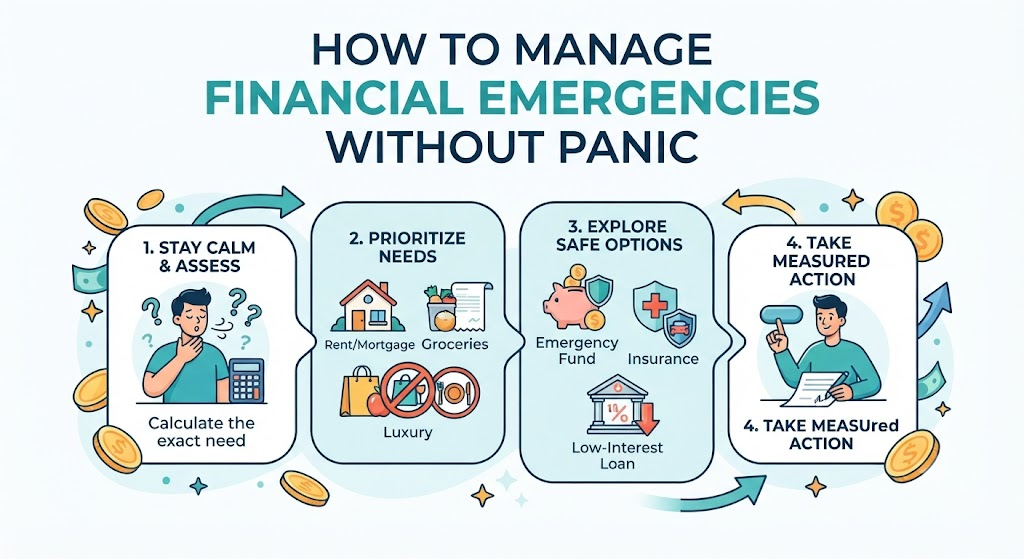
Step-by-Step Decision Framework for Financial Emergencies
When an emergency strikes, follow these sequential steps to handle it without panicking:
Step 1: Pause and Assess the Situation
Do not make any financial moves in the first 24 hours unless it is a life-or-death medical situation. Take a deep breath, list the exact amount of money needed, and check your current liquid cash.
Step 2: Separate Essential Expenses from Non-Essentials
Freeze all discretionary spending immediately. Stop dining out, pause subscriptions, and halt shopping. Direct every available rupee toward the emergency while keeping the lights on and buying basic groceries.
Step 3: Check Available Safety Nets
Look at your assets in order of liquidity:
- Emergency Fund: Cash sitting in a savings account or liquid mutual fund.
- Insurance: Health, auto, or term insurance claims that might cover the expense.
- Low-Interest Credit: Overdraft facilities or pre-approved loans from trusted banking partners.
Step 4: Explore Alternatives Before Liquidating Long-Term Investments
Selling stocks during a market crash or cashing out retirement funds early can cause permanent damage to your long-term wealth. Explore other options first.
Common Mistakes to Avoid During a Financial Crisis
Making rushed decisions during a crisis often multiplies the problem. Here are common mistakes people make:
- Borrowing from Loan Apps or Predatory Lenders: Quick-cash apps often hide exorbitant interest rates and fees. This turns a short-term cash crunch into long-term debt slavery.
- Cashing Out Retirement Funds Early: Dipping into retirement savings triggers heavy penalties and taxes, destroying the compounding growth you built over years.
- Ignoring Creditors: If you cannot pay a bill or loan EMI, do not hide from your lender. Call them proactively to explain the situation and ask for a temporary payment holiday or restructured terms.
- Emptying Every Rupee: Spending every single cent without keeping a tiny buffer for secondary emergencies can leave you completely vulnerable the following week.
Risks and Limitations of Emergency Borrowing
Sometimes, savings are not enough, and borrowing becomes necessary. However, every borrowing method carries trade-offs:
| Borrowing Method | Advantages | Risks / Limitations |
| Credit Card Loan / Cash Advance | Instant access without paperwork | Very high interest rates and processing fees |
| Loan Against Fixed Deposits (FD) | Low interest rate, quick approval | Locks up your deposit; default liquidates the FD |
| Personal Loan | Unsecured, flexible repayment tenure | Requires good credit score; takes a few days to disburse |
| Borrowing from Family | No formal interest or credit checks | Can strain personal relationships if repayment is delayed |
How to Prepare for Future Emergencies
The best way to handle a financial emergency is to prepare for it before it happens.
- Build an Emergency Fund: Aim to save 3 to 6 months’ worth of essential living expenses. Keep this money in a safe, easily accessible savings account or liquid fund.
- Review Your Insurance Cover: Ensure you have adequate health insurance for your entire family and term life insurance if you have dependents. Insurance acts as a shield against massive medical bills.
- Automate Savings: Set up an automatic transfer to your emergency savings account every time you receive your salary.
Checklist for Handling an Unexpected Financial Shock
- [ ] Verify whether the expense is a genuine emergency or a postponed luxury.
- [ ] Calculate the exact cash amount required.
- [ ] Review current bank balances and liquid savings.
- [ ] Check if insurance policies cover the specific incident.
- [ ] Freeze all non-essential monthly expenses and subscriptions.
- [ ] Contact banks or creditors for low-interest options before considering unsecured loans.
- [ ] Avoid high-interest digital lending apps entirely.
Key Terms
- Emergency Fund: A pool of easily accessible cash set aside exclusively for unexpected financial crises.
- Liquid Assets: Cash or investments that can be converted into cash quickly without losing value.
- Discretionary Spending: Money spent on non-essential items, such as entertainment, dining out, and luxury goods.
- Predatory Lender: A lending institution or app that charges unfair, deceptive, or excessively high interest rates.
- Asset Liquidation: The process of converting investments or physical possessions into cash.
FAQs
What is the ideal size for an emergency fund?
An emergency fund should ideally cover 3 to 6 months of your essential living expenses, including rent, utilities, groceries, and loan EMIs. If your income is irregular, aim for 9 to 12 months.
Should I pay off debt or build an emergency fund first?
Build a starter emergency fund (at least one month of expenses) first, then tackle high-interest debt. Once high-interest debt is clear, expand your emergency fund to the full 3–6 month target.
Can I invest my emergency fund in stocks for higher returns?
No. An emergency fund must be safe and instantly accessible. Putting it in volatile assets like stocks means its value could drop right when you need the money the most.
What should I do if I lose my job tomorrow?
First, pause all non-essential spending. Second, calculate how many months your current savings can sustain you. Third, update your resume, reach out to your professional network, and look into temporary or freelance work while searching for a permanent role.
Are credit cards good for emergencies?
Credit cards can act as a temporary bridge for a few days, but carrying a long-term balance during an emergency can trigger massive interest charges. Use them only if you can repay the amount quickly.
Is it okay to borrow money from friends and family?
Yes, borrowing from trusted family members is often safer than using high-interest loans, provided you establish a clear, written repayment agreement to protect your personal relationships.
How do I know if an expense is a true emergency?
Ask yourself three questions: Is it unexpected? Is it necessary for survival, health, or earning an income? Can it wait? If it is unexpected, urgent, and necessary, it is an emergency.
Conclusion
Financial emergencies are stressful, but they do not have to lead to financial ruin. By staying calm, separating essential needs from wants, exploring safe funding sources, and avoiding panic-driven debt, you can navigate even the toughest monetary shocks. Preparation today is your best defense against the uncertainties of tomorrow.
